Creative Experiences

The Lie Beginners Tell Themselves About Bobbin Lace
You may have seen Bedfordshire bobbin lace or the intricate beauty of Calais lace and immediately thought:
“There is absolutely no way I could ever learn that.”
Threads flying everywhere.
Wooden bobbins clacking together.
And somehow… magically… lace appears.
If you’ve ever felt that way, you’re not alone.
Because I thought exactly the same.
My Love Lace Story
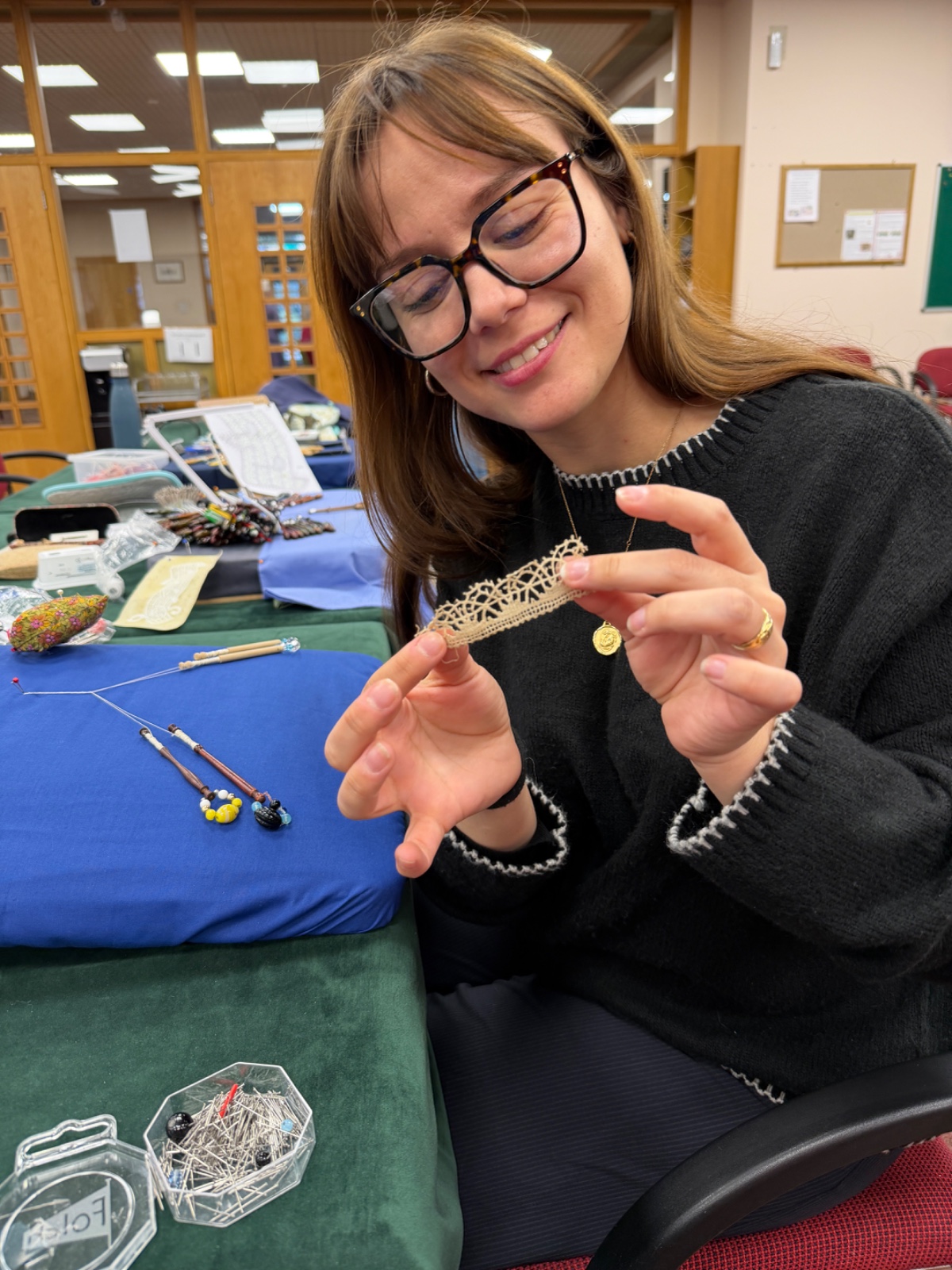
Hi, Morane speaking here, and this is the story of how I went from admiring lace from afar to finally learning how to make it.
I have always loved lace. Not casually. Not “oh that’s nice.”
More like completely obsessed with beautiful textiles.
When I was young, I worked at Atelier des Modistes in San Francisco, specialising in bridal and event gowns. Suzanne, the owner, shared the same passion for what we called: ✨ “pretty, pretty things.”
She introduced me to incredible fabrics, trims and lace designs. One of my favourites was inspired by the lace worn by Marilyn Monroe in the final wedding scene of Gentlemen Prefer Blondes.
Here’s a fun fact. When I was 18, I hand-appliquéd that lace pattern onto a bridal veil.
Nine years later…
I wore that exact same lace design on my own wedding day. Lace had clearly found its way into my life.
One day I stumbled across an old documentary about lacemakers. There were women sitting, head down almost folded in two, throwing wooden bobbins into the air, twisting threads, pinning patterns… And suddenly lace appeared.
It looked like magic.
My first thought was probably the same as yours: “I need to do that.” But there was just one problem. It looked impossibly complicated.
The Beginner’s Struggle
Years later I moved to Scotland and decided to finally learn bobbin lace. Simple, right?
Not quite.
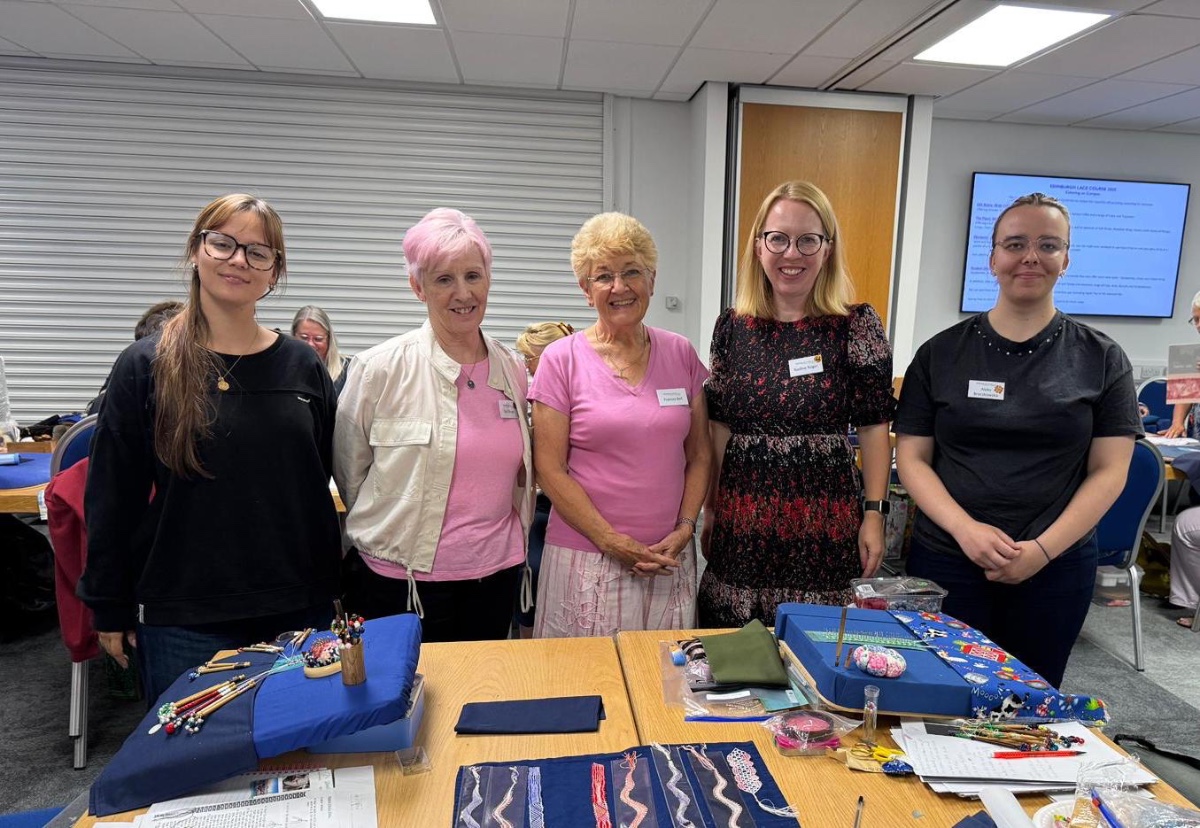
I found clubs and workshops, but very little was available for complete beginners.So I tried to teach myself. Let’s just say…
That did not go well.
If you’ve ever tried learning lace from a book or YouTube video without guidance, you know exactly what I mean.
Threads tangle, tension disappears, and suddenly everything looks nothing like the pattern. Bobbin lace is not impossible, but it is very hard to learn completely alone.

Eventually, I joined a workshop at Heriot-Watt University. That’s where I met Nadine, the founder of Creative Experiences. For the first time, I felt like I had finally entered the circle of lacemakers.
Things started to make sense. Techniques improved. Confidence grew.
But the truth is… I was lucky. I happened to be in the right place at the right time.
And that raises an important question.
How Do We Keep This Craft Alive?
Bobbin lace is a centuries-old craft, but today only a small number of people can truly teach it.
Many tutors:
- teach only occasionally
- have other jobs
- focus on intermediate or advanced students
Which makes learning as a beginner surprisingly difficult.
At Creative Experiences, we started asking ourselves:
How do we keep this savoir-faire alive?
How do we make sure new makers can still learn these techniques?
Because one thing I learned is this:
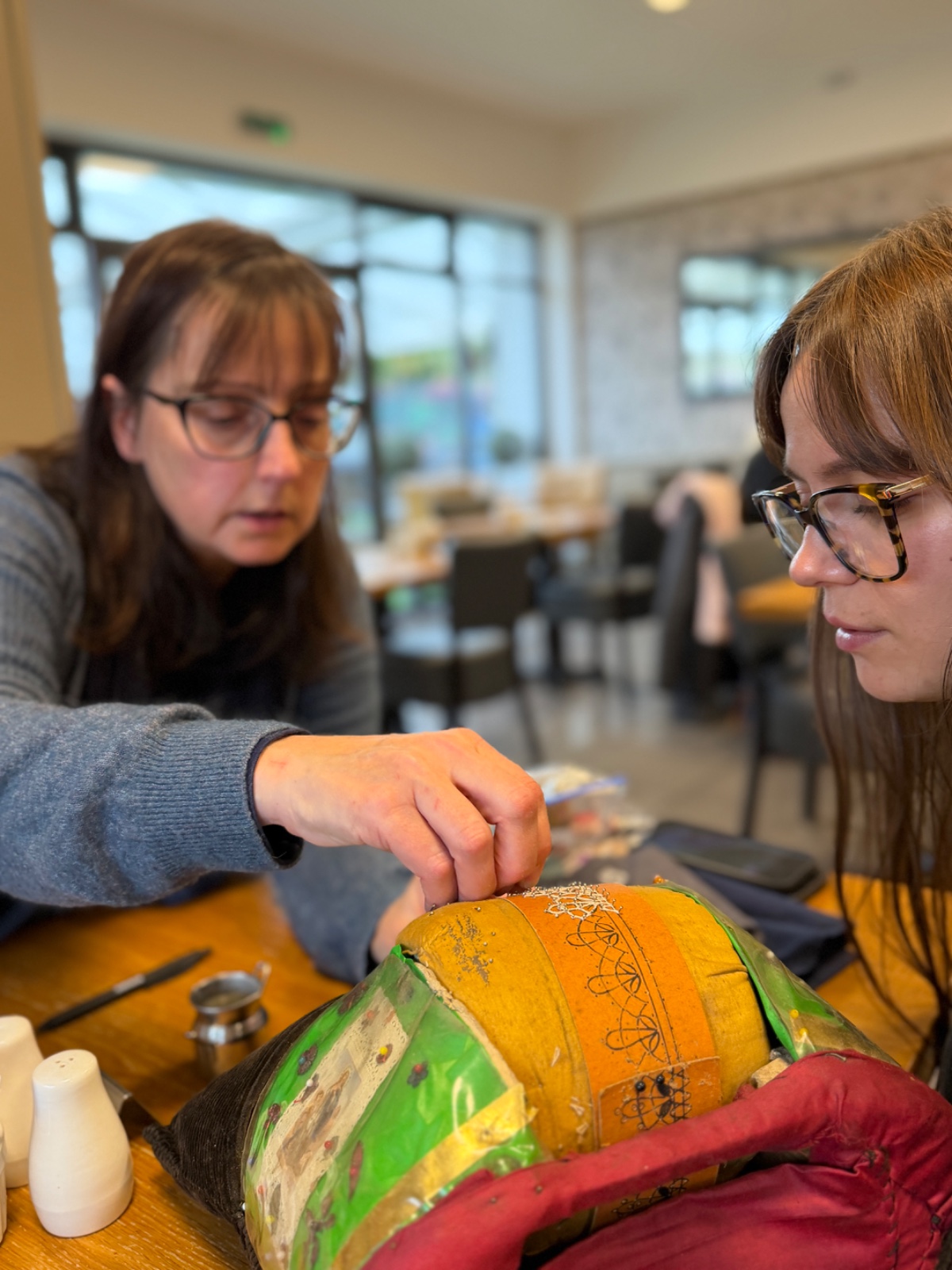
👉 Having a mentor changes everything.
A good tutor can see mistakes you can’t, correct your tension, guide your hands and help you progress much faster.
The Lace Technique I Wish I Had Discovered Sooner
Yes, a mentor can change everything.
Speaking from experience, I know how valuable good guidance can be. I was fortunate to learn the basics of bobbin lace from inspiring teachers such as Frances Bell and Carole Smith, who helped me build a strong foundation in the craft.
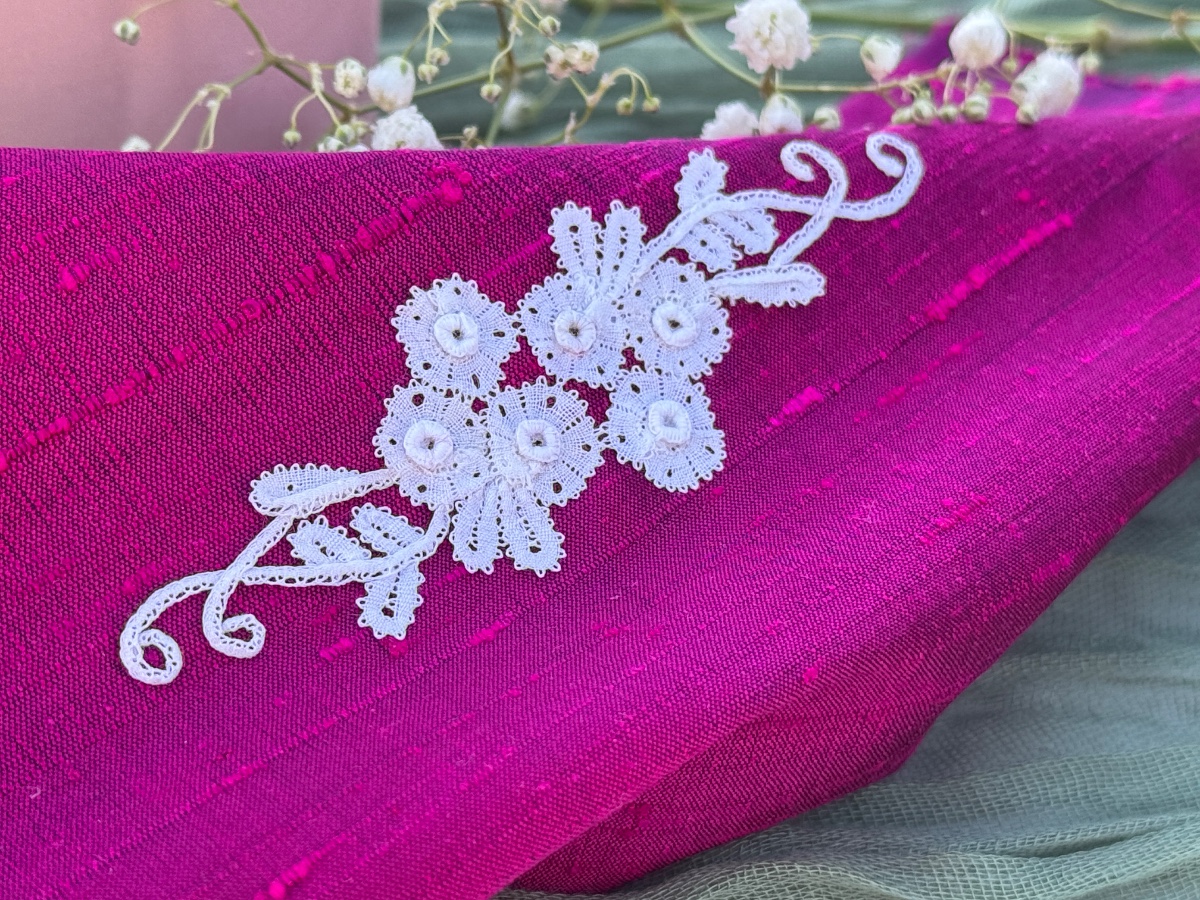
Later, I discovered Rosaline Perle lace, a delicate and often overlooked lace style that immediately caught my attention.
What makes Rosaline Perle particularly appealing is that:
- it uses around fourteen bobbins, making it accessible for beginners
- it remains a relatively rare technique, giving it a unique character
- the patterns feature beautiful floral designs, especially roses
The lace creates elegant motifs that feel both romantic and timeless.
For me, discovering Rosaline Perle was a turning point. It showed me that lace making doesn’t always have to start with large, complicated patterns.
In October 2026, we will host a special Rosaline Perle lace retreat in Lisbon,
led by renowned lacemaker Judith Cordell.
Whether you are a complete beginner looking to learn the basics of bobbin lace, or already have some experience and would like to explore this beautiful technique, this retreat offers the perfect opportunity to develop your skills.
About the Author
Creative Experiences