Learning to Make Pastel de Nata in Lisbon.
Discovering the secrets behind Portugal's iconic custard tart, one flaky layer at a time.
When you think of Portugal and a visit to Lisbon, I’m sure many of you think about the incredible tiled buildings, beautiful weather and of course a city so built on its culture. Many of you will also think about the delicious food and perhaps have enjoyed one too many Pastel de Nata. Even if you haven’t visited this wonderful city, I’m sure you will be familiar with the flaky custard pastry that the Portuguese seem to eat at every opportunity.
We arrived in Lisbon for the start of our lacemaking retreats and were greeted at our stunning hotel the Palácio do Visconde with not one, but two Pastel de Nata and a perfect glass of Porto, this was made even better by the staff who welcomed us. This was the start of the week-long tasting of Pastel de Nata.
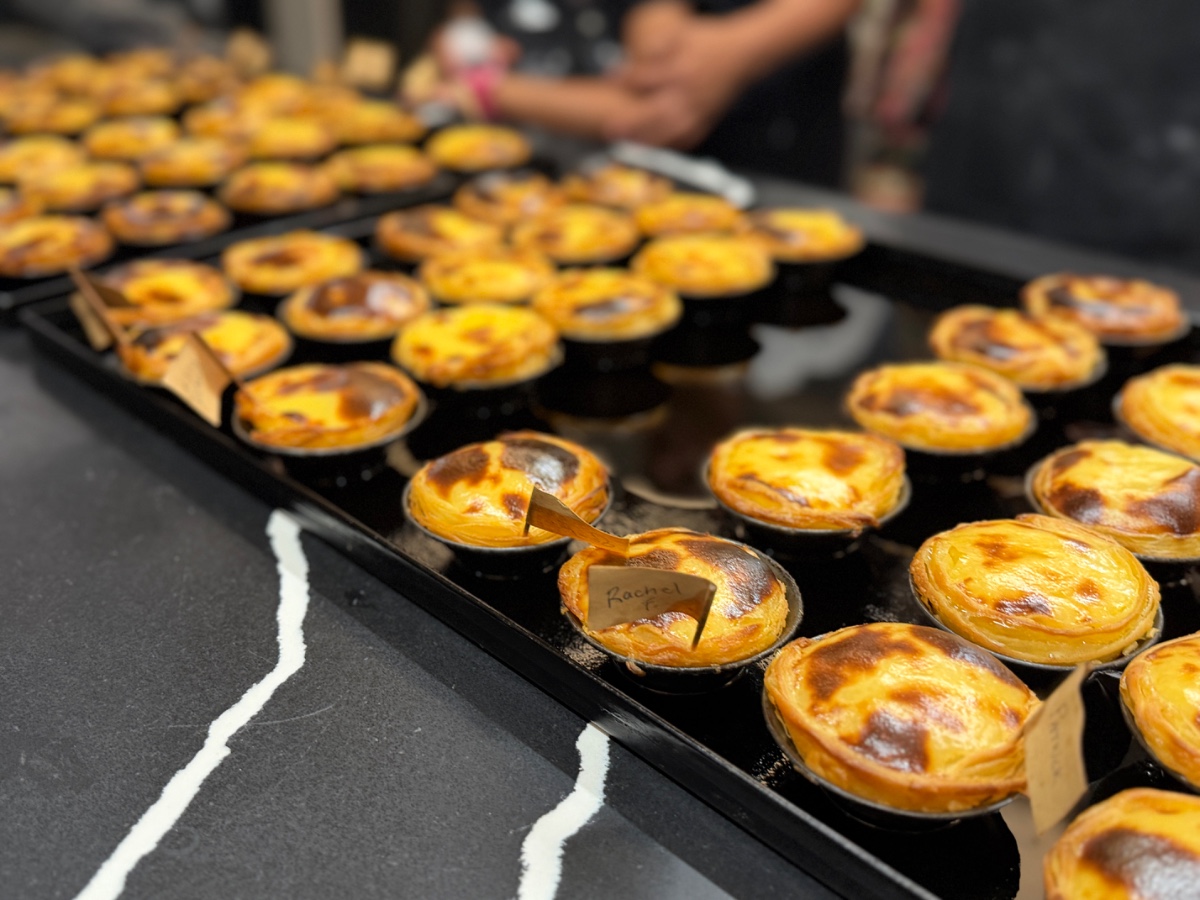
These delicious little bites can be consumed at any part of the day, with coffee, at breakfast or walking through the colourful streets of the city, however they are best enjoyed warm and fresh out of the oven with a sprinkle of cinnamon on top!
After a fantastic week of making beautiful lace, laughter and many pastries Nadine and I waved off our first guests, packed our suitcases and headed into the city for something very special.
You will get to know, if you didn’t already, that everything we do here is of course always for research…… yes including making and eating pastries!
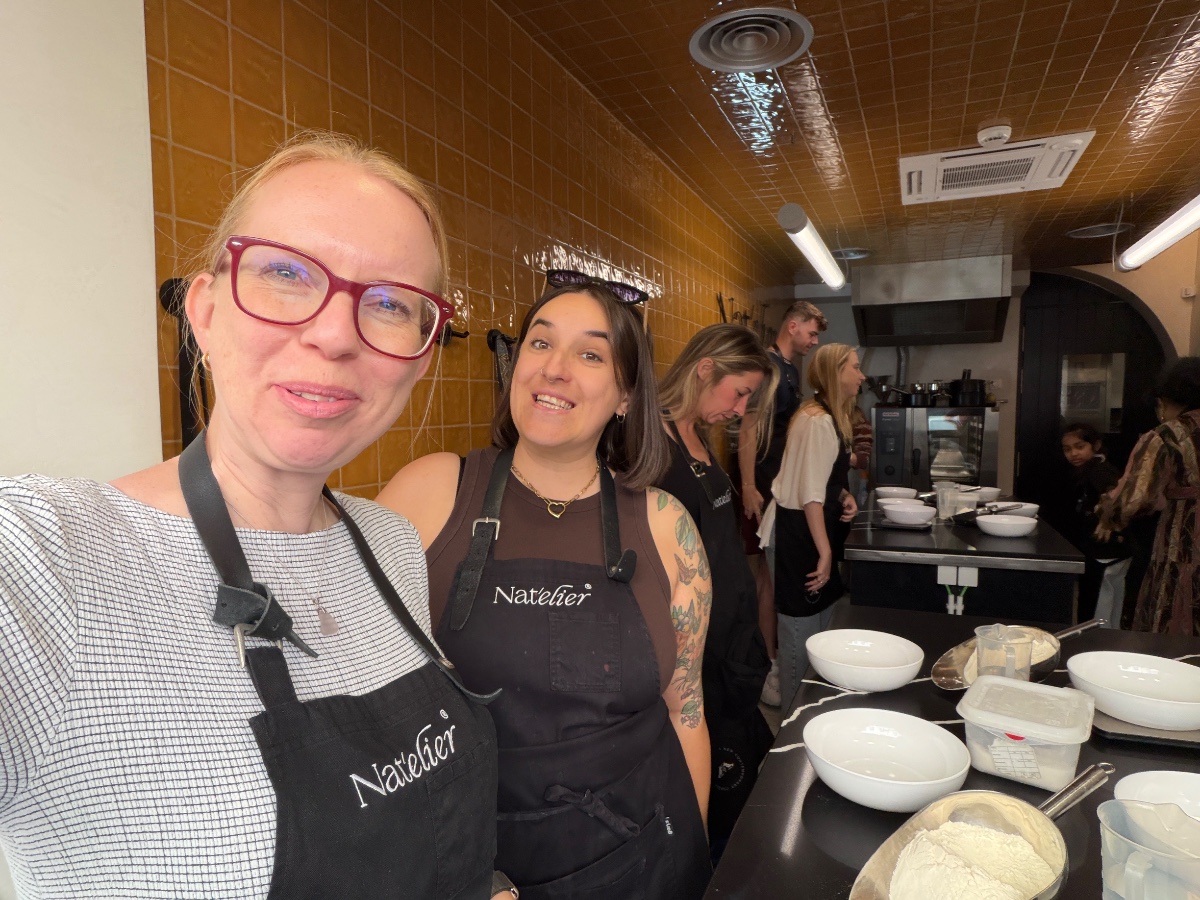
We arrived at Nat'elier for our Pastel de Nata class with anticipation of what to expect from our lesson. We met Sergio our chef and tutor for this unique experience who was friendly, knowledgeable and the most importantly made the most perfect Pastel de Nata. We were given aprons and a workstation and talked through the recipe step by step.
To start, we made the pastry. These flaky tarts require puff pastry which means lamination – something neither of us had even done! For me, when I hear lamination, I think of hours and hours of work, however for this it was relatively simpleand only required us to roll it over a few times. Lamination in pastry is rolling fat such as butter or margarine into your pastry – this creates the layers of crispy texture found for example in croissants, sausage rolls and many other delicious foods. Nadine and I worked really hard on our lamination, not to be too gentle and also not to apply too much pressure as this causes tearing and the fat layer to break through.
Next, we rolled our pastry into sausage shapes and set them aside to rest whilst as a group we made the custard to go into our tarts. This part was done as a team with our table. It was nice to talk and get to know our fellow bakers as there were people from all over the world taking part in this lesson. Just like us here at Creative Experiences – everyone is welcome.
Now the custard…. With the expert guidance of Sergio, we made a smooth custard base with lemon peel and cinnamon sticks, brought up to almost boiling before adding our sugar and flour mix. Whisking and whisking to ensure there were no lumps! Nadine did the whisking and I poured the flour in, after being a chef for many years I knew which one was more work! Now we added the egg yolk and stirred those into our delicious custard base to finish our filling for the Pastel de Natas.
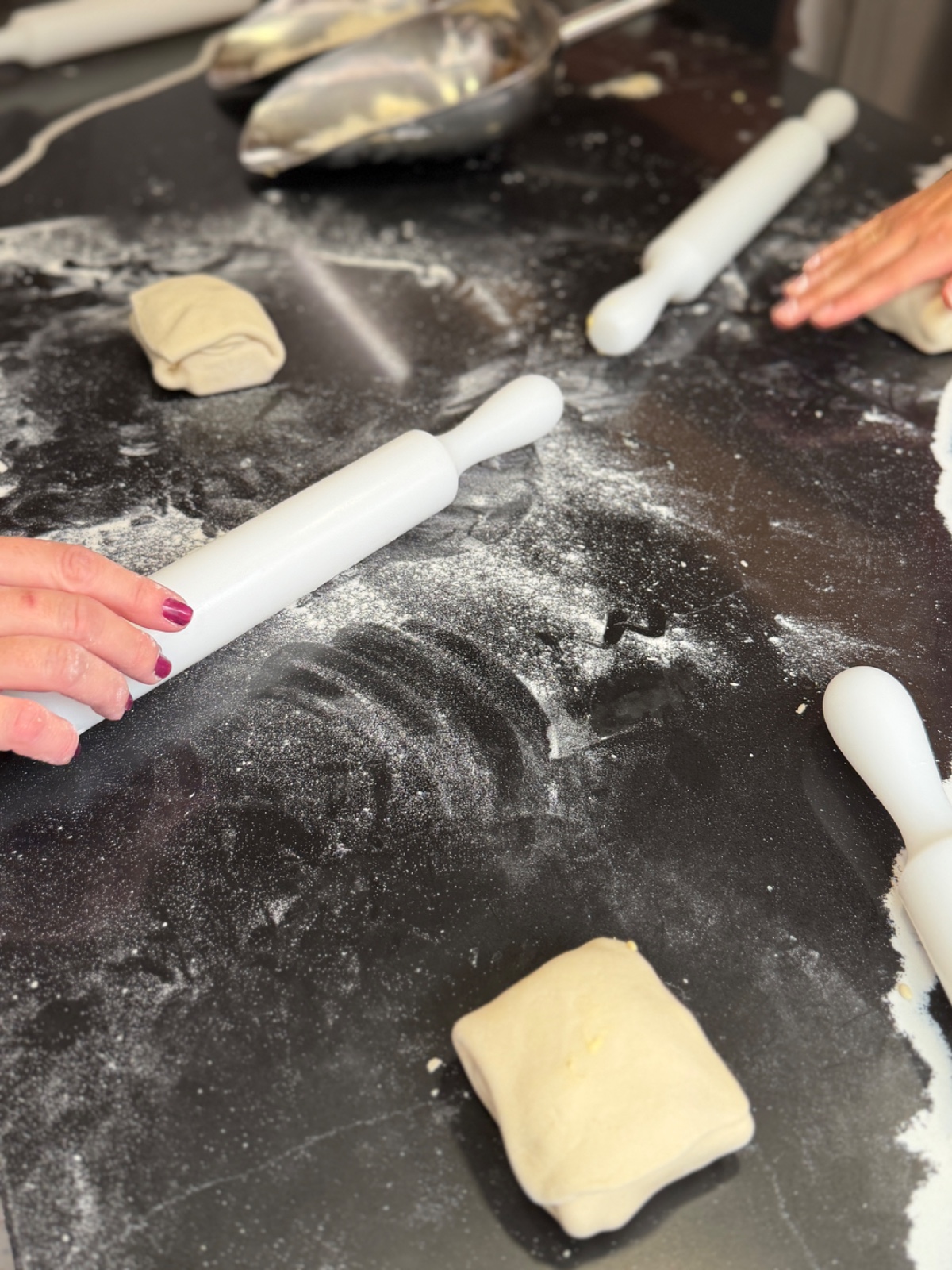
At this point the room smelt divine, the sweet custard mixed with lemon and cinnamon made me want to get a spoon and dive into the bowl. However, we had pastry to roll so we set it aside to cool a little. Here came the hardest part!
PASTRY! After leaving the pastry to rest it was time to line our moulds and begin our assembly of the tarts.
This part was probably the most difficult, we had to cut the pastry into sections for each mould and then push the pastry up and over the edge. With your thumb you push down into the pastry and then pull your thumb up to the top to create the sides, sounds simple but it required the correct pressure as to not break the pastry.
Once we had completed five tart cases each, we were ready to add the custard! We poured the silky mixture into a funnel which has a closing mechanism in the handle, so you don’t overfill your tarts. This made us feel like very fancy professional chefs even though we were covered in flour and we were laughing every step of the way. If you have met us both, you know we’re the queens of silly and of course had to have a sword fight with the rolling pins – back to the serious tart making.
At this point, all that was left to do was bake our Pastel de Nata in the oven and wait patiently for them to be ready to eat. We ordered a drink, had a wonderful group picture taken and then the smell started to fill the room. The tarts came piping hot out of the oven looking perfectly cooked, golden and ready to eat!
It was incredible to make them from scratch and then get to eat those exact tarts you’d worked so hard on at the end. They were delicious and maybe, perhaps we are biased, the best Pastel de Nata we’d ever tasted.
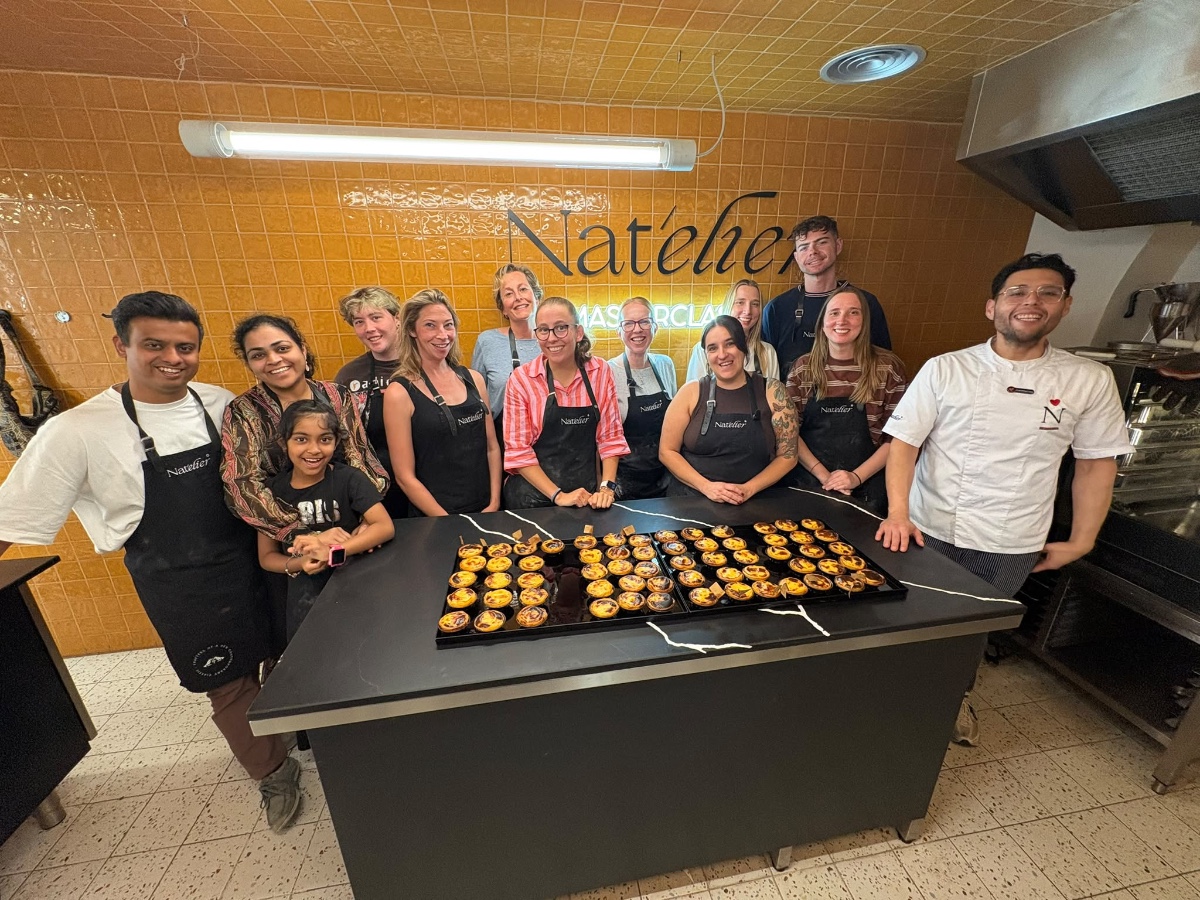
If you are ever in Lisbon, you should definitely give this a try! Perhaps we should add it to our future trips to the city, what do you think?
You can join us in Lisbon next October (2027) for a wonderful Textile Art retreat with Cas Holmes.
Emma x